
Water Leak Detection in Topsfield
24/7 water leak detection in Topsfield and surrounding areas. IICRC-certified, insurance billing accepted. Call (800) 393-1532.
A water bill that’s climbed for no reason, a warm patch on the slab, a musty smell behind the baseboard that won’t go away no matter how many times you clean it: these are the quiet signals of a leak that hasn’t announced itself yet. By the time water stains bloom on a ceiling or a wall feels soft to the touch, the leak has usually been running for weeks. Water leak detection finds the source before it becomes a structural or mold problem, using equipment that doesn’t require opening walls or tearing up flooring to confirm what’s wrong.
What water leak detection actually involves
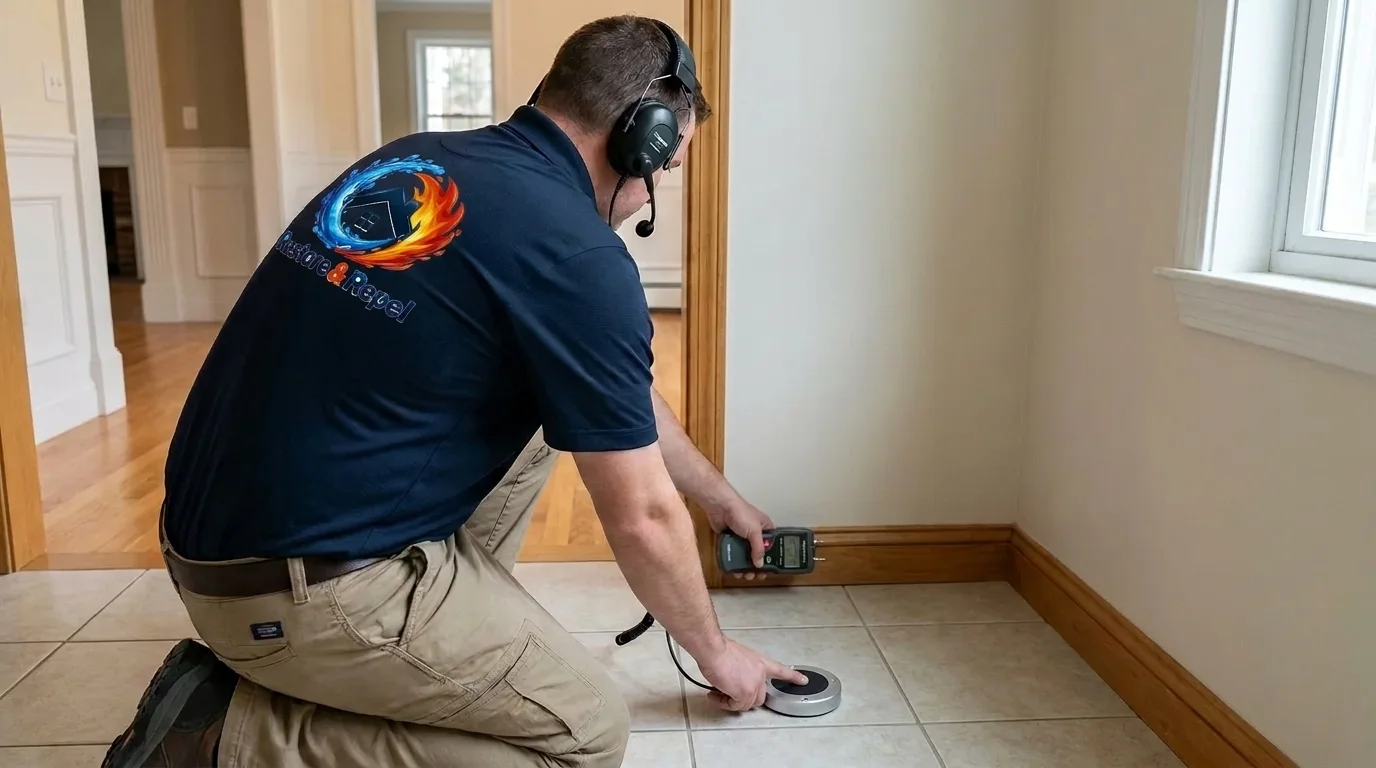
Leak detection is a diagnostic process, not a repair. A technician uses acoustic listening devices to pick up the sound of water moving or dripping inside a wall cavity or under a slab, thermal imaging cameras to spot temperature differences caused by moisture, and moisture meters to confirm readings at the surface. For suspected slab leaks, pressure testing on the plumbing line can isolate whether the loss is on the hot or cold side before any concrete is touched. Most inspections take one to two hours depending on the size of the home and how many fixtures or lines need to be checked. The goal at the end is a specific, documented location, not a guess.
Our process
- Intake and symptom review. We ask about water bill changes, sounds, visible staining, or musty odor, and where in the home they’ve been noticed.
- Non-invasive scanning. Acoustic and thermal equipment is used to narrow the search area without cutting into drywall, tile, or slab.
- Moisture mapping. A moisture meter confirms affected materials and helps establish how far the water has traveled from its source.
- Pressure and line isolation (when needed). For suspected slab or in-wall supply line leaks, isolating sections of the plumbing system under pressure helps confirm the exact line at fault.
- Written findings. You get a clear report of what was found, where, and what access (if any) will be needed to make the repair, so you’re not paying a plumber to re-diagnose the problem.
What separates a good leak detection response from a bad one
The most common mistake is guessing based on where the stain or smell is strongest. Water travels along joists, studs, and plumbing chases before it ever shows up on a visible surface, so the wet spot on the ceiling is often several feet from the actual leak. A good detection process confirms the source with equipment and documentation before any demolition happens. A rushed one leads to opened walls in the wrong place, repeat visits, and avoidable repair costs.
Insurance adjusters also pay attention to how a leak is documented. Thermal images, moisture readings, and a written location report support a claim far better than a verbal description of where the plumber thinks the leak is. This matters particularly with slab leaks, where confirming the exact line and depth affects whether the repair is a spot fix or a full re-route.
What does water leak detection cost?
Costs vary with the size of the home, the type of leak, and whether slab penetration or pressure testing is required. These are typical industry ranges, not a quote: every property and every leak is different, and Restore & Repel provides a written scope of findings before any further work begins. Homeowners insurance typically covers the cost of locating and accessing a leak when it’s tied to a covered water loss, though coverage for the detection itself varies by policy, so it’s worth checking with your carrier.
| Scenario | Typical range |
|---|---|
| Single fixture or visible area inspection | $200 - $400 |
| Whole-home acoustic and thermal scan | $350 - $650 |
| Slab leak detection with pressure testing | $500 - $900 |
| Hidden leak in wall, multiple access points suspected | $400 - $750 |
| Detection combined with moisture mapping for insurance documentation | $450 - $800 |
Seasonal & regional considerations
North Shore winters bring freeze-thaw cycles that stress older copper and galvanized supply lines, especially in homes built before the 1970s that are common throughout Topsfield and neighboring towns. A line that cracks during a cold snap doesn’t always leak right away; it can seep slowly once temperatures rise and pressure shifts, which is why late winter and early spring are when a lot of hidden leaks finally show themselves. Homes on private wells or with older slab construction are also more prone to slow leaks that go undetected until a water bill or well pump cycle looks off.
Service area
Restore & Repel provides water leak detection throughout Topsfield and surrounding North Shore communities. If you’re unsure whether what you’re seeing is worth a professional look, a short phone conversation can usually tell you whether it warrants a visit.
If you’ve noticed a water bill that doesn’t add up, a damp spot that keeps coming back, or a smell you can’t place, schedule a leak detection visit before the damage spreads any further. Call (800) 393-1532 to get a technician out to find the source, not just the symptom.
Frequently Asked Questions
Does homeowners insurance cover water leak detection?
How do you find a leak without cutting into my walls or floors?
What's different about detecting a slab leak versus a leak in a wall?
My water bill went up but I don't see any damage. Could it still be a leak?
What happens after the leak is located?
Looking for the best water leak detection company in Topsfield?
Restore & Repel provides licensed and insured water leak detection in Topsfield, MA and the surrounding area, and has served local property owners since 2003. Customers rate us 5.0 out of 5 stars across 2 Google reviews. We answer calls 24/7 — call (800) 393-1532 for immediate help.
Need Water Leak Detection now?
We respond 24/7 across Topsfield and surrounding MA cities.
Related Coverage
- Our Restoration Services
- Contact Restore & Repel
- 24/7 Emergency Water Damage Restoration in Topsfield
- 24/7 Emergency Water Heater Flood Cleanup in Topsfield
- 24/7 Emergency Sewage Cleanup and Sanitization in Topsfield
- 24/7 Emergency Water Removal & Cleanup in Topsfield
- 24/7 Emergency Flood Damage Restoration in Topsfield
- 24/7 Emergency Water Damage Restoration in North Andover
- 24/7 Emergency Water Damage Restoration in Peabody
- The 5 Best Water Damage Restoration Companies in Topsfield, MA (2026)
- What To Do in the First 24 Hours After Water Damage