
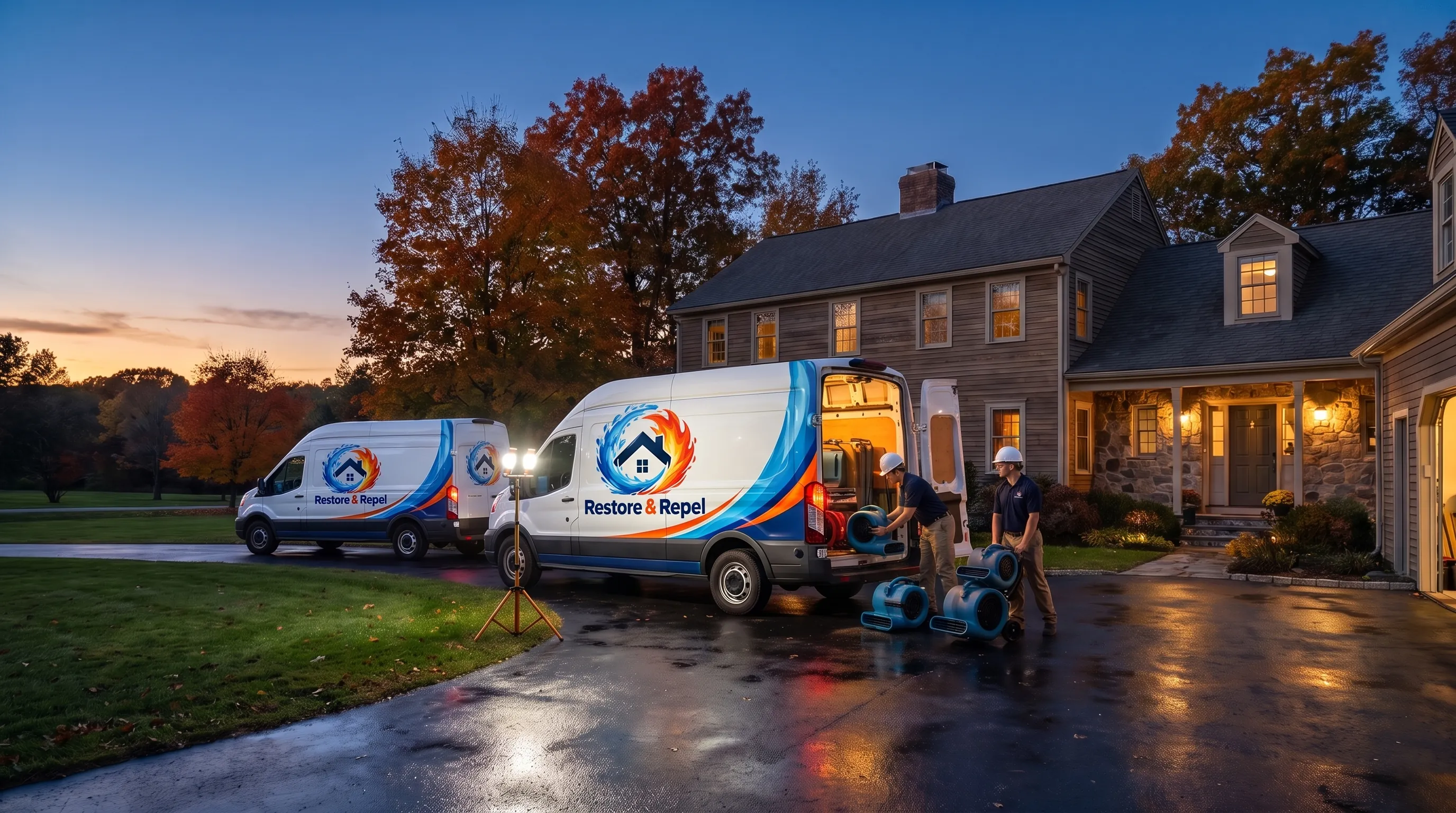
If water damage just happened in your home, here’s what to do right now: shut off the water source if you can locate it, cut power to any affected rooms at the breaker if outlets or fixtures are submerged, and start moving anything you can lift, furniture, electronics, rugs, off the wet floor. Document the damage with photos before you touch anything else. Then get air moving and water out, because the first 24 hours determine whether this is a cleanup job or a mold remediation job. Everything below walks through that window hour by hour.
Why the First 24 Hours Matter So Much
Water doesn’t sit still, and it doesn’t stay clean. Within the first few hours, clean water from a supply line or appliance can start picking up contaminants from flooring adhesives, subfloor materials, and whatever else it touches, shifting from what the industry calls Category 1 (clean) toward Category 2 (gray water) the longer it’s left standing. Drywall wicks moisture upward like a paper towel, sometimes a foot or more above the visible waterline. Hardwood floors start cupping as the boards absorb moisture unevenly on top and bottom.
Mold is the bigger clock you’re racing. Under the right conditions, warm, humid, and dark, mold spores that are already present in nearly every home can begin colonizing wet material in as little as 24 to 48 hours. That’s not a scare tactic, it’s just how fast organic material (drywall paper, wood, insulation) becomes a food source once it’s saturated. The goal in the first day isn’t to make everything look normal again. It’s to stop the water, remove what’s saturated beyond saving, and get drying equipment on the rest before that window closes.
Immediate Steps: Hour by Hour
- Stop the source. If it’s a burst pipe or supply line, shut off the main water valve, usually near the water meter or where the line enters the house. If it’s a water heater or washing machine, shut off the valve feeding that specific appliance.
- Cut power to wet areas. If water has reached outlets, light fixtures, or is pooling near a panel, shut off the breaker for that zone before you do anything else. Standing water and electricity don’t mix, and this isn’t a step to skip to save time.
- Photograph everything before you move it. Baseboards, flooring, the undersides of furniture legs, the waterline on walls. Your insurance adjuster will want this, and you won’t remember exact details in a week.
- Remove standing water. A wet/dry shop vac handles small amounts. For anything beyond a few inches or a flooded basement, a sump pump or submersible pump moves faster than you can with buckets.
- Pull up what’s saturated. Area rugs, cushions, and anything sitting directly in water should come out now, both to stop them from wicking more moisture into surrounding materials and to start drying them separately.
- Increase air movement. Open windows if the weather allows, point box fans across wet flooring, and run a dehumidifier if you have one. In Topsfield’s humid summer stretches, an open window alone won’t do much, you need actual air exchange.
- Move furniture and belongings off wet surfaces. Use aluminum foil or wood blocks under furniture legs still in the affected area to stop wicking while you figure out next steps.
What Not To Do
- Don’t run a regular household vacuum on standing water. It’s not built for it and you risk electric shock.
- Don’t use a hair dryer or space heater pointed at wet drywall or wood. It can dry the surface while trapping moisture underneath, which is exactly the setup mold needs.
- Don’t wait to see if it “dries on its own” overnight. Carpet padding and the subfloor beneath it hold moisture long after the surface feels dry to the touch.
- Don’t ignore a musty smell because you don’t see visible mold yet. Smell often shows up before anything is visible, especially behind baseboards or under flooring.
- Don’t throw away damaged items before documenting them. Insurance claims move faster with a clear photo record of what was lost and its condition.
- Don’t assume a dry carpet surface means a dry subfloor. Press a hand flat on the carpet in the affected area; if it feels cool or damp, moisture is still trapped below.
When to Call a Professional
A small, contained spill you caught immediately, a dishwasher leak you mopped up within minutes, is often something you can handle with fans and a wet vac. Call in help when any of these apply:
- The water came from a source other than clean supply lines (a toilet, sewer backup, or floodwater), which falls into Category 2 or 3 water and carries contamination risk.
- Water has been sitting for more than a few hours, or you’re not sure how long it’s been there (a slow leak discovered late is common with older Topsfield homes and their original cast iron or galvanized plumbing).
- Water reached wall cavities, insulation, or subflooring, areas you can’t fully dry with a fan and a dehumidifier because you can’t see what’s happening inside them.
- You’re dealing with more than a couple hundred square feet, a flooded basement, or water that traveled between floors.
- You already smell mustiness, see discoloration on drywall, or notice paint bubbling.
Professional water damage restoration uses moisture meters and infrared imaging to find water that’s migrated behind walls and under flooring, not just what’s visible on the surface, then applies commercial-grade air movers and dehumidifiers sized to the actual volume of wet material, following drying benchmarks based on the IICRC S500 standard rather than guesswork.
What Recovery Looks Like After Day One
Once the standing water is gone and equipment is running, the work shifts from emergency response to monitoring. Drying typically continues for several days, with moisture readings checked regularly in affected materials until they return to a normal range, not just until they look or feel dry. Baseboards may need to come off to dry wall cavities properly. Carpet padding is usually replaced rather than dried and reused, since it rarely dries fully and cleanly once saturated.
This is also the point where you’re working with your insurance adjuster, and the photos and notes from day one matter here. Keep a simple log: what happened, when you noticed it, what you did, and when professional help arrived. It makes the claims conversation faster and reduces back-and-forth later.
If you’re standing in a wet room in Topsfield right now trying to decide whether this is a weekend DIY job or something bigger, the honest answer is: if you can see the water source and the area affected is small and contained, you likely have it handled. If you’re unsure how far the water traveled, how long it sat, or what’s happening behind the walls, that uncertainty is exactly what a water damage assessment is for. Restore & Repel can walk through the affected area with you, explain what’s salvageable, and start drying equipment the same visit if needed. Call (800) 393-1532 to talk through what you’re seeing.