
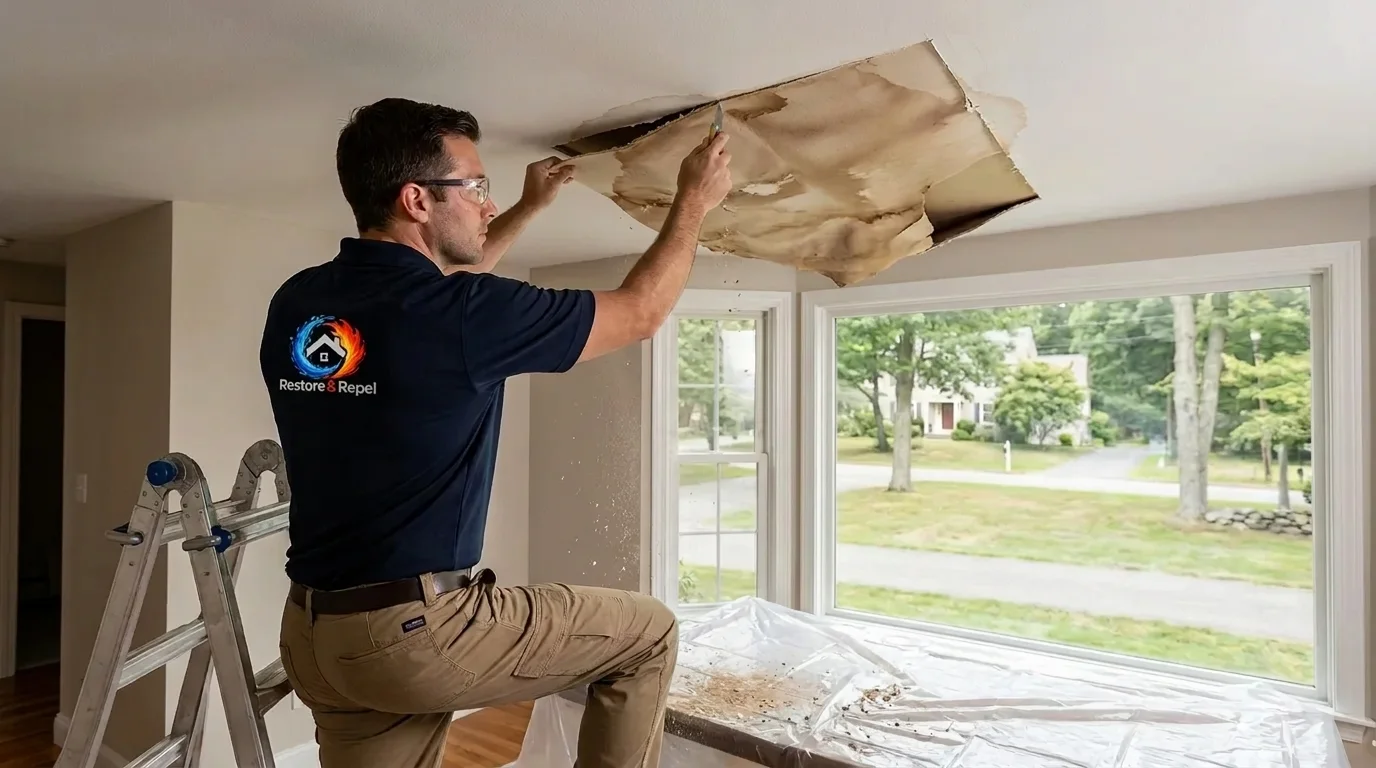
24/7 Emergency Ceiling Water Damage Repair in Topsfield
24/7 emergency ceiling water damage repair in Topsfield and surrounding areas. IICRC-certified, insurance billing accepted. Call (800) 393-1532.
Water coming through your ceiling right now? Call (800) 393-1532. We answer 24/7, and we can walk you through immediate steps to protect what’s below the leak while we get a technician moving.
A brown-edged stain spreading across drywall, a soft spot that gives slightly when you press it, or an actual drip landing in a bucket all point to the same underlying problem: water has gotten into the ceiling assembly and is sitting in the insulation, the drywall paper, or the framing above it. Ceiling water damage is rarely just cosmetic. By the time a stain is visible, the drywall has usually already absorbed enough moisture to lose structural integrity, and a sagging ceiling can mean the material is close to failure.
What ceiling water damage repair actually involves
Ceiling repair after a leak is really two jobs stacked on top of each other: stopping and drying out the moisture source, then rebuilding the ceiling itself. The drywall or plaster that’s stained or sagging almost always has to come down, because painted-over water stains hide moisture that can still be migrating through the material days later. Behind that surface, we’re checking the insulation (wet fiberglass loses R-value and stays wet for weeks if left in place), the top plates and joists, and any electrical boxes or fixtures that sat in the path of the water.
Equipment depends on how long the ceiling has been wet and how large the affected area is. A fresh leak caught within a day or two might dry in place with air movers and a dehumidifier running for a few days. A ceiling that’s been dripping for a week, or one where the drywall has already delaminated, needs to be opened up, the wet material removed, and the cavity dried before any new drywall goes up. We use moisture meters on the surrounding drywall and framing, not just the visibly stained spot, because water travels along joists and can show up in a stain several feet from where it actually entered.
Our process
- Source identification. Before we touch the ceiling, we find out where the water is actually coming from: roof flashing, a bathroom above, an HVAC line, or a plumbing leak in the floor joist cavity. Repairing the ceiling without stopping the source means doing the job twice.
- Containment and material removal. We lay down floor protection, set up containment if the area is large, and remove drywall or plaster that’s saturated past the point of drying in place. Sections that are only lightly damp may be saved.
- Structural drying. Air movers and dehumidifiers go to work on the exposed framing and insulation. We check moisture content daily with a meter, not by eye, since drywall can look dry on the surface while the stud behind it is still wet.
- Moisture verification before rebuild. We don’t close the ceiling back up until the framing reads at or near normal moisture content. Closing in wood that’s still wet is one of the most common reasons ceiling repairs come back as mold jobs six months later.
- Rebuild and finish. New drywall, taping, texture matching, and paint, scoped to match the surrounding ceiling so the repair isn’t an obvious patch.
What separates a good ceiling water damage response from a bad one
The most common shortcut we see is painting over a stain without ever opening the ceiling to check the framing. A stain-blocking primer covers the discoloration but does nothing for insulation that’s still wet or framing that’s starting to support mold growth. Insurance adjusters generally know to look for this: moisture readings on the framing, not just a photo of a painted ceiling, are part of a defensible claim file.
Another mistake is treating every ceiling leak as a drywall-only repair. If the water sat for more than 48 hours, insulation usually needs to be replaced rather than dried, because wet fiberglass compresses and loses most of its insulating value even after it dries out. And on older homes in this area with plaster-and-lath ceilings instead of drywall, the repair approach is different: plaster doesn’t wick water the same way drywall does, but it’s far more likely to crack and release from the lath once it’s been saturated, which changes how much needs to come down versus how much can be patched.
What does ceiling water damage repair cost?
Costs vary widely depending on the size of the affected area, whether insulation needs replacement, and whether the ceiling is drywall or plaster. Every loss is different, which is why we provide a written scope of work before any repair begins, so you know exactly what’s included. Homeowners insurance typically covers ceiling water damage repair when the source is sudden and accidental, such as a burst pipe or appliance failure, though gradual leaks from long-term roof or plumbing neglect are often excluded.
| Scenario | Typical range |
|---|---|
| Small stain, surface dry, repaint only | $250 - $600 |
| Single drywall section, localized drying and patch | $600 - $1,800 |
| Larger ceiling area, insulation replacement, full rebuild | $1,800 - $4,500 |
| Plaster ceiling, lath damage, skim coat repair | $2,000 - $5,500 |
| Ceiling collapse or multi-room damage | $5,500 - $12,000+ |
Seasonal & regional considerations
In Topsfield and the surrounding North Shore towns, ice damming is one of the more common causes of winter ceiling leaks. Melting snow refreezes at the roof eave, backs up under the shingles, and finds its way into the ceiling cavity below, often appearing as a stain near an exterior wall weeks after the thaw. In spring and summer, ceiling leaks are more likely to trace back to failed roof flashing around chimneys and skylights, or to upstairs bathroom plumbing in the area’s many older colonials and capes, where cast iron or galvanized supply lines are reaching the end of their service life.
Service area
We repair ceiling water damage throughout Topsfield and nearby communities including Ipswich, Boxford, Hamilton, and Wenham, working with the area’s mix of older farmhouses, colonials, and newer construction.
If water is actively coming through your ceiling, schedule your moisture assessment now so we can identify the source, stop further damage to the framing above, and scope the repair before it spreads.
Frequently Asked Questions
Does homeowners insurance cover ceiling water damage repair?
Is a sagging ceiling an emergency?
Can a water-stained ceiling just be repainted instead of repaired?
How long does it take to dry a ceiling before repair can begin?
Will the insulation above my ceiling need to be replaced?
Looking for the best ceiling water damage repair company in Topsfield?
Restore & Repel provides licensed and insured ceiling water damage repair in Topsfield, MA and the surrounding area, and has served local property owners since 2003. Customers rate us 5.0 out of 5 stars across 2 Google reviews. We answer calls 24/7 — call (800) 393-1532 for immediate help.
Need Ceiling Water Damage Repair now?
We respond 24/7 across Topsfield and surrounding MA cities.
Related Coverage
- Our Restoration Services
- Contact Restore & Repel
- 24/7 Emergency Water Damage Restoration in Topsfield
- 24/7 Emergency Flood Damage Restoration in Topsfield
- 24/7 Emergency Basement Flooding Cleanup in Topsfield
- 24/7 Emergency Burst Pipe Cleanup and Repair in Topsfield
- 24/7 Emergency Water Heater Flood Cleanup in Topsfield
- 24/7 Emergency Water Damage Restoration in Peabody
- 24/7 Emergency Water Damage Restoration in Danvers
- The 5 Best Water Damage Restoration Companies in Topsfield, MA (2026)
- Burst Pipe Emergency Checklist: Step-by-Step Response
- Ceiling Water Damage Repair Cost in Topsfield, MA: What You'll Pay in 2026