
24/7 Emergency Basement Flooding Cleanup in Topsfield
24/7 emergency basement flooding cleanup in Topsfield and surrounding areas. IICRC-certified, insurance billing accepted. Call (800) 393-1532.
Basement flooding in Topsfield? We answer 24/7, and getting water out fast is the difference between a dry weekend and a mold problem three weeks later.
A flooded basement rarely announces itself with a dramatic failure. More often it starts as a damp smell near the sump pump, a dark line creeping up the drywall, or carpet that squishes underfoot after a heavy rain. By the time standing water is visible, it has usually already wicked into baseboards, subfloor, and the bottom few inches of framing. Basement water removal has to happen before that moisture migrates further into wall cavities and insulation, which is why the first hours matter more in a basement than almost anywhere else in the house.
What basement flooding cleanup actually involves
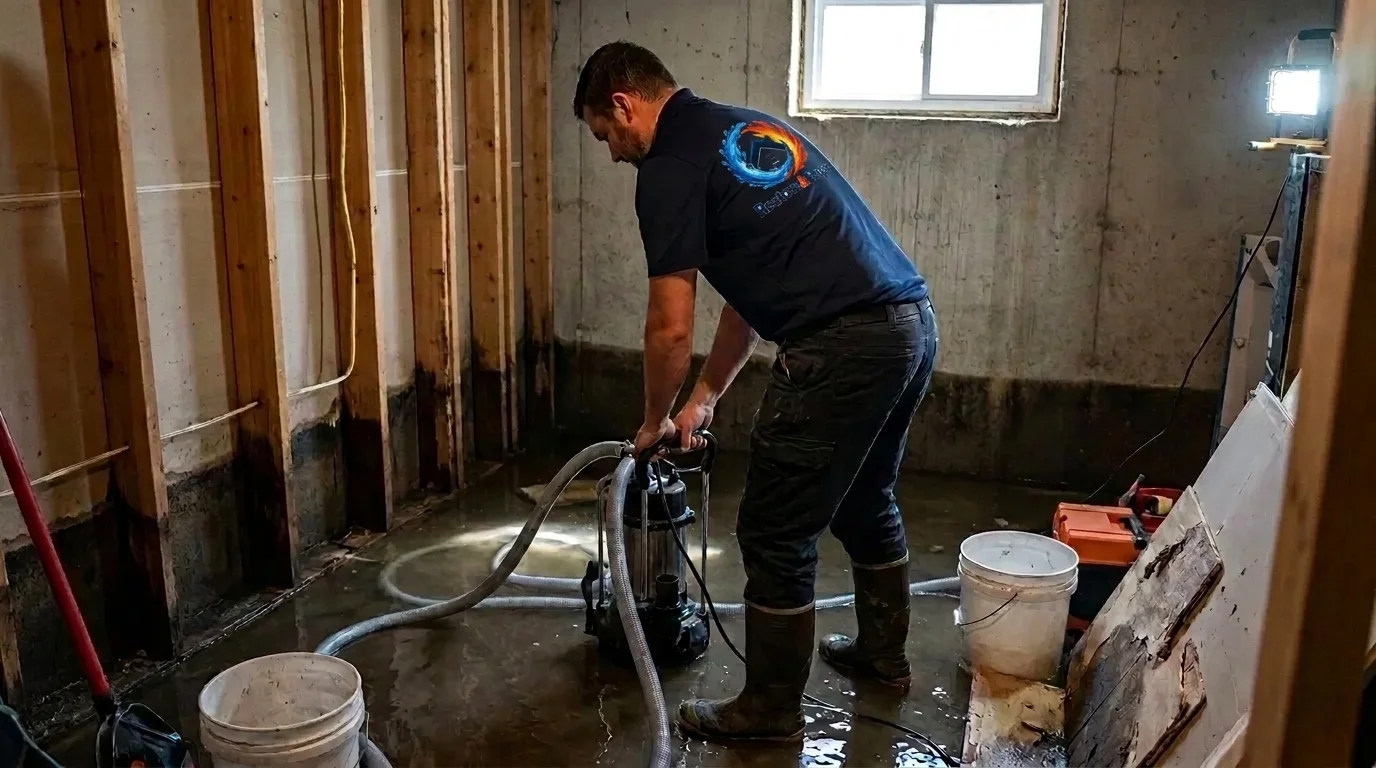
Basement flooding cleanup starts with identifying the water’s category (clean groundwater seepage, gray water from an appliance failure, or contaminated water from a sewer backup) because that classification determines what gets removed versus dried. Submersible pumps and truck-mounted extractors handle standing water first. From there, the work shifts to what’s underneath: carpet pad almost never survives a basement flood and is typically removed, while concrete slab, framing, and some drywall can often be dried in place if the water was clean and extraction happened quickly.
Basements complicate drying because they’re already the most humid, least ventilated part of most houses. Drywall cut lines, if needed, are usually kept low (a foot or so above the waterline) to allow airflow into the wall cavity without removing more material than necessary. Finished basements with carpet, built-ins, or drop ceilings take longer to assess and dry than an unfinished utility space.
Our process
- Source identification and water shutoff. Before anything else, we confirm whether the water is still actively entering (sump failure, foundation crack, backed-up drain) and address the source so extraction isn’t working against a continuing flow.
- Category classification. We identify whether the water is clean, gray, or black, which determines whether materials like carpet pad, baseboard, and insulation can be dried or need to come out.
- Extraction. Submersible and truck-mounted pumps remove standing water, followed by extraction wands on carpet and under cushion if flooring is being saved.
- Controlled demolition where needed. Saturated drywall, baseboard, and non-salvageable flooring are removed to the height the water reached, exposing framing and slab to air movement.
- Drying and moisture monitoring. Air movers and dehumidifiers are set based on the room’s size and material exposure, with moisture readings in framing and subfloor tracked daily until they return to a dry standard, not just until the space feels dry to the touch.
What separates a good basement flooding response from a bad one
The most common mistake is drying by eye instead of by meter. A basement can look and smell dry within a day or two while framing, sill plates, or the underside of subflooring are still well above acceptable moisture content. An operator who pulls equipment early based on appearance alone is setting up a mold problem that shows up weeks later, often behind baseboard or inside a finished wall cavity that never got opened.
Another frequent issue is treating every basement flood the same regardless of water category. Groundwater seepage from a heavy rain is handled very differently than water from a failed sewage ejector pump, and skipping that classification step can mean drying materials that should have been removed, or under-protecting a crew and homeowner from contaminated water. Insurance adjusters generally want to see moisture logs, photos of the affected materials before removal, and documentation of the water category, so a written record matters as much as the physical work.
What does basement flooding cleanup cost?
Costs vary with the size of the basement, whether it’s finished or unfinished, how long the water sat before cleanup began, and the water’s category. Every loss is different, which is why Restore & Repel provides a written scope before work begins rather than a flat quote over the phone. Homeowners insurance often covers sudden, accidental water damage (a burst pipe or failed appliance) but typically excludes gradual seepage or groundwater flooding unless a separate endorsement is in place, so it’s worth checking your policy language early.
| Scenario | Typical range |
|---|---|
| Unfinished basement, clean water, minor standing water | $1,500 - $3,500 |
| Unfinished basement, several inches of standing water | $3,000 - $6,500 |
| Finished basement, carpet and drywall removal required | $5,000 - $12,000 |
| Contaminated water (sewage backup) | $7,000 - $15,000+ |
| Structural drying only, no demolition needed | $1,200 - $2,800 |
Seasonal & regional considerations
Topsfield basements see two distinct flooding patterns. Spring snowmelt combined with saturated ground raises the water table and pushes groundwater through foundation cracks and window wells, especially in older homes with fieldstone or parged foundations. Summer and fall bring heavy downpours that overwhelm sump pumps and window well drains faster than homeowners expect, particularly during a power outage when the sump isn’t running at all. Either way, the clock on mold colonization starts within 24 to 48 hours regardless of the season, so timing matters more than the cause.
Service area
We respond to basement flooding throughout Topsfield and nearby communities including Boxford, Ipswich, Middleton, and Danvers.
A flooded basement doesn’t wait for business hours, and neither do we. Call (800) 393-1532 to schedule basement water removal and get a written drying plan before more moisture works its way into your framing.
Frequently Asked Questions
Does homeowners insurance cover basement flooding cleanup?
How do you decide what to remove versus dry in place after a basement flood?
How long does basement drying usually take?
What should I do while waiting for a basement flooding cleanup crew?
Why does my basement smell musty even after the water is gone?
Is a sump pump failure the same kind of job as a foundation seepage issue?
Looking for the best basement flooding cleanup company in Topsfield?
Restore & Repel provides licensed and insured basement flooding cleanup in Topsfield, MA and the surrounding area, and has served local property owners since 2003. Customers rate us 5.0 out of 5 stars across 2 Google reviews. We answer calls 24/7 — call (800) 393-1532 for immediate help.
Need Basement Flooding Cleanup now?
We respond 24/7 across Topsfield and surrounding MA cities.
Related Coverage
- Our Restoration Services
- Contact Restore & Repel
- 24/7 Emergency Water Damage Restoration in Topsfield
- 24/7 Emergency Flood Damage Restoration in Topsfield
- 24/7 Emergency Burst Pipe Cleanup and Repair in Topsfield
- 24/7 Emergency Ceiling Water Damage Repair in Topsfield
- 24/7 Emergency Water Heater Flood Cleanup in Topsfield
- 24/7 Emergency Water Damage Restoration in Danvers
- 24/7 Emergency Water Damage Restoration in Ipswich
- The 5 Best Water Damage Restoration Companies in Topsfield, MA (2026)
- Burst Pipe Emergency Checklist: Step-by-Step Response
- Who to Call for a Flooded Basement in Topsfield, MA (and What to Do Before They Arrive)