
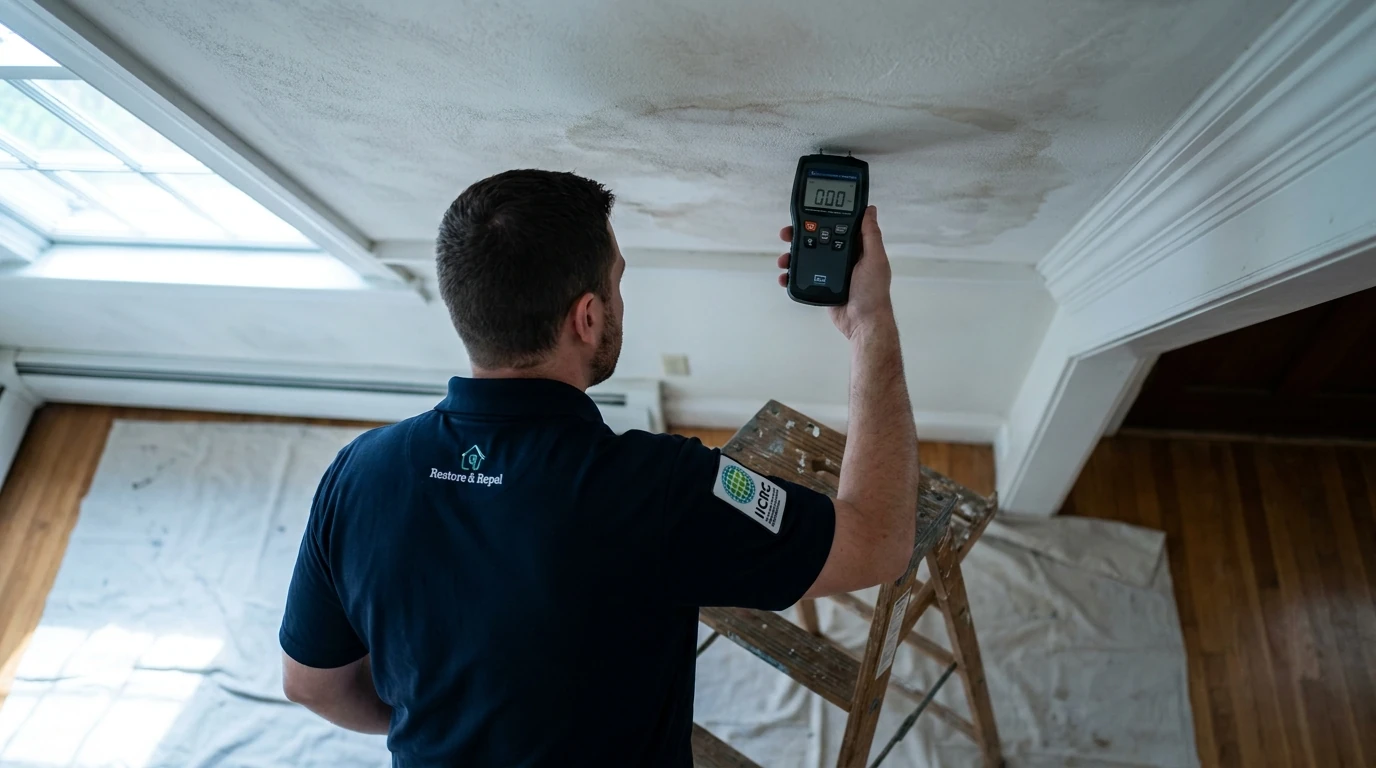
TL;DR: In Massachusetts, repairing a water-damaged ceiling typically costs $300 to $6,500, depending on whether you need a paint touch-up, a drywall patch, or a full plaster ceiling replacement. That range covers the ceiling repair only. Finding and fixing the leak source, a roof flashing failure, an ice dam, or a failed bathroom supply line, usually adds $300 to $3,000 more. Plaster ceilings common in older Topsfield homes cost noticeably more to repair than drywall.
If you’ve spotted a brown ring spreading across the bedroom ceiling after last week’s rain, or water is dripping near a light fixture while the upstairs shower runs, you actually need two numbers, not one: what it costs to fix the ceiling, and what it costs to stop whatever is causing it. Treating those as a single quote is the most common reason North Shore homeowners get sticker shock when a contractor’s estimate comes in higher than expected.
How Much Does Ceiling Water Damage Repair Cost in Massachusetts?
Most Massachusetts homeowners pay between $300 and $6,500 to repair a water-damaged ceiling, and the biggest swing comes from whether the ceiling is drywall or the original lath-and-plaster still common in pre-1950s homes around Topsfield and the North Shore.
| Scenario | Typical Cost |
|---|---|
| Paint-only touch-up over a dry, stable stain | $300 - $800 |
| Small drywall patch (under 4 sq ft), texture and paint matched | $450 - $1,200 |
| Drywall ceiling replacement, one full room | $1,200 - $2,800 |
| Plaster ceiling patch or skim-coat repair | $1,800 - $4,500 |
| Full plaster ceiling replacement (lath and plaster) | $3,500 - $6,500 |
| Leak source repair (roof flashing, ice dam, or supply line) billed separately | $300 - $3,000+ |
Notice the leak source sits on its own line. A roofer or plumber fixes the hole or the failed fitting; a restoration or general contracting crew handles the drying, demolition, and rebuild of the ceiling itself. Some jobs need both. Every estimate should separate these two scopes in writing, not blend them into one number.
What Drives the Cost Up or Down?
The total depends on how much water got in, how long it sat, and what the ceiling is made of, more than on the size of the stain you can see.
- Plaster vs. drywall. Plaster costs roughly double drywall to repair because matching the old lath-and-plaster technique takes a skilled hand, and many Topsfield colonials and capes still have it.
- Category of water. Clean water from a supply line dries and repairs cheaper than water that sat and started supporting mold growth, which can begin within 24 to 48 hours on wet drywall or plaster per the EPA.
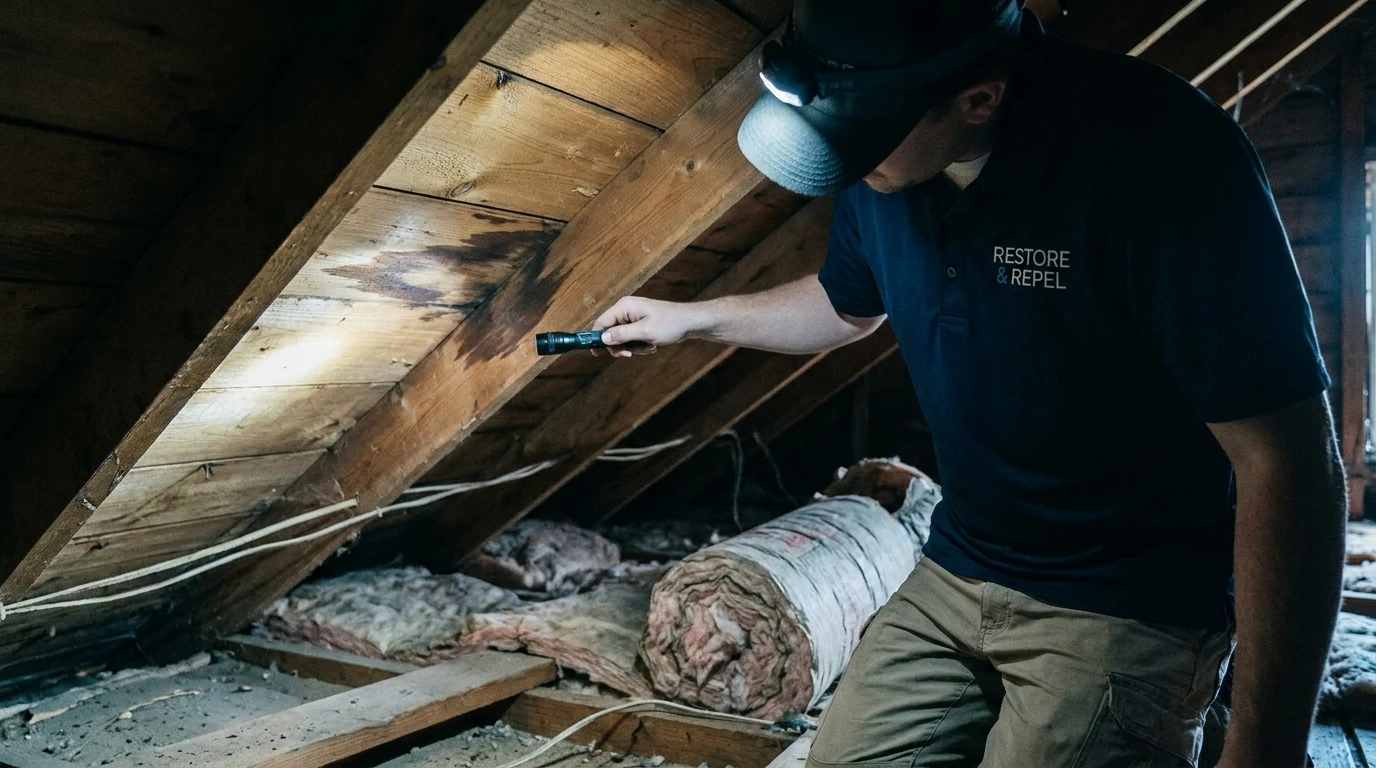
- Sagging or structural softness. A ceiling that’s bowing or soft to the touch has saturated insulation or framing above it, which usually means a full section replacement, not a patch.
- Texture and paint matching. Popcorn or heavily textured ceilings cost more to blend seamlessly than a flat, smooth ceiling.
- Access. A vaulted ceiling or one above a stairwell needs scaffolding, which adds labor.
Will Homeowners Insurance Cover a Water-Damaged Ceiling?
Most Massachusetts homeowners policies cover ceiling damage when the water came from a sudden, accidental source inside the home, like a burst supply line or a failed appliance hose. Gradual leaks, long-term seepage, and deferred maintenance are typically excluded, even though the damage shows up on the ceiling the same way.
An ice dam backing water up under the shingles is often treated differently than a slow roof leak: many policies cover sudden interior damage from an ice dam as a named peril, but the cost of removing the ice itself is frequently excluded. Check your policy’s actual wording, since this varies by insurer, per the Insurance Information Institute. Our guide to homeowners insurance and water damage walks through the distinction in more detail.
Whichever the cause, document it before anything is touched: photos of the stain, the ceiling, and any visible source, plus a dated timeline. That documentation protects the claim whether the adjuster approves it in full, in part, or not at all.
What Happens During Ceiling Water Damage Repair?
- Find and stop the source. No repair holds if the leak is still active, whether that’s a roof penetration, an ice dam, or a bathroom supply line.
- Map the moisture. A moisture meter identifies exactly how far the water traveled behind the ceiling and into adjacent framing, so nothing wet gets covered back up.
- Dry affected materials to the IICRC S500 standard using air movers and dehumidifiers, which usually takes 2 to 4 days before rebuild starts, per the IICRC.
- Remove damaged material, cutting drywall back to dry studs or carefully addressing failed lath-and-plaster sections.
- Rebuild the ceiling, matching texture and sheen so the repair isn’t visible once painted.
- Final moisture check before closing out the job, confirming nothing was sealed in wet.
For homes where the roof itself is the problem, flashing failures and worn shingles are common culprits across North Shore winters; see our water damage restoration cost guide for how roof-related losses compare to plumbing-related ones.
If the ceiling is sagging, discolored over a wide area, or the stain keeps coming back after painting, it’s worth a professional assessment rather than guessing at the scope. Request a water damage estimate from Restore & Repel to get the leak source identified and the ceiling scope written down before any drywall comes down.
About Restore & Repel
This guide was prepared by Hernany Dasilva and the Restore & Repel team, whose IICRC-certified technicians (WRT, FSRT, AMRT) have served Topsfield and the North Shore since 2003 under Massachusetts contractor license CS-113-396. Their crews handle water damage restoration, ceiling water damage repair, roofing, mold remediation, fire and smoke restoration, and reconstruction across Topsfield, Peabody, Beverly, Danvers, and the surrounding area, operating 24/7 for active leaks and emergency calls.