
TL;DR: General contracting for reconstruction and renovation in Topsfield, MA means one licensed contractor manages framing, electrical, plumbing, and finish work on a single permit and schedule, whether the job is rebuilding after a fire or water loss or a standalone kitchen or bath remodel. Massachusetts requires a Home Improvement Contractor (HIC) registration for most residential work over $1,000, plus local permits through the Topsfield Building Department. Confirm the HIC number, the insurance certificate, and a written scope before any demolition starts.
If a burst pipe or a kitchen fire just forced you to gut a room, the restoration crew’s job ends once the space is dried out, demoed, and safe. Rebuilding the drywall, cabinets, flooring, and trim is a separate phase called reconstruction, and it’s where a lot of Topsfield homeowners get stuck between their insurance adjuster, their restoration company, and whoever is supposed to actually put the house back together. Here’s how that handoff works and what to check before you sign anything.
What Does General Contracting Actually Cover After a Restoration Job?
General contracting is the management layer that turns a gutted, dried-out space back into a finished room: one licensed party scheduling framing, electrical, plumbing, drywall, paint, and flooring under a single permit instead of you coordinating five separate trades yourself.
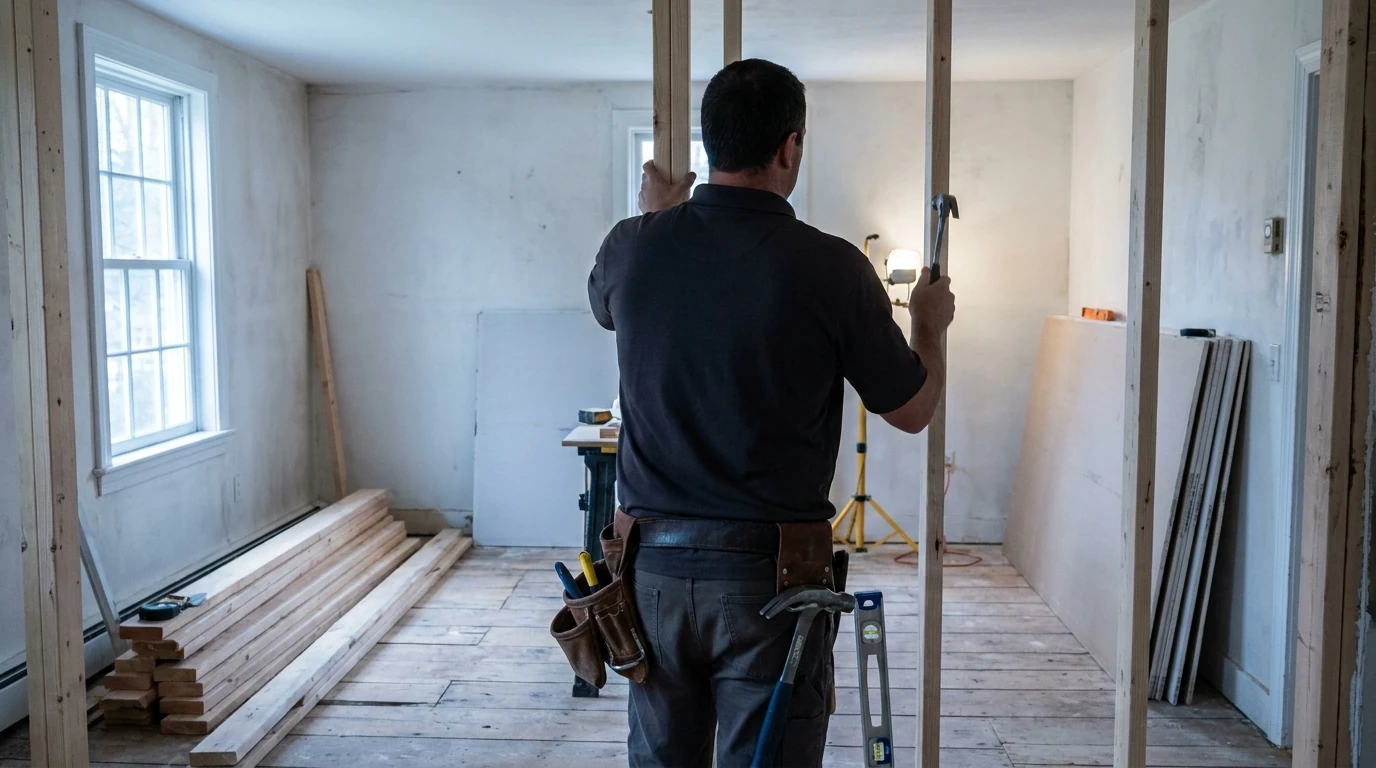
After mitigation (water extraction, soot cleanup, mold removal) finishes, the space is usually down to studs or subfloor. Reconstruction picks up from there: new insulation and drywall, matching trim profiles in older Topsfield colonials and capes, electrical and plumbing rough-in inspections, and final finishes. A good general contractor pulls the permit, schedules inspections with the town, and carries the job to a certificate of occupancy or final sign-off where one is required.
For homes built before the 1970s, which is a lot of the housing stock around Topsfield and neighboring Boxford and Ipswich, reconstruction often turns up surprises once walls open: knob-and-tube wiring, undersized framing, or old plaster that doesn’t patch the way modern drywall does. That’s normal, and it’s part of why a written scope matters before work starts.
How Is Reconstruction Different From a Standard Renovation?
Reconstruction restores a space to its prior condition after damage; renovation changes or upgrades a space that wasn’t damaged. The permitting and insurance process differ even though the on-site work can look identical.
Reconstruction tied to an insurance claim is usually scoped against the adjuster’s estimate, meaning the contractor is rebuilding to match what was lost (same square footage, comparable finish level) unless you choose to upgrade and pay the difference out of pocket. A standalone renovation, like converting a Topsfield cape’s second floor or redoing a kitchen that was never damaged, has no insurance scope behind it. You and the contractor set the budget and finish level from scratch.
The two tracks can run together. A homeowner rebuilding a fire-damaged kitchen will sometimes decide, since the walls are already open, to also relocate an island or add an outlet bank, which shifts part of the job from reconstruction into renovation and changes how it’s billed against the claim.
What Should You Check Before Hiring a General Contractor in Topsfield?
Confirm the contractor holds a current Massachusetts Home Improvement Contractor (HIC) registration, carries liability and workers’ comp insurance, and will pull the Topsfield building permit in their own name, not yours.
Massachusetts requires HIC registration for most residential contracting work over $1,000, and the state tracks registered contractors through OCABR’s Home Improvement Contractor Program. Ask for the HIC number before you sign and verify it rather than taking it on faith. Also ask who pulls the permit: in Massachusetts, an unpermitted job can complicate an insurance claim and create problems when you eventually sell the house.
Get the scope of work in writing, itemized by trade or room, with a payment schedule tied to completed stages rather than a large deposit up front. If the job follows an insurance loss, your restoration company’s documentation (moisture logs, photos, the mitigation invoice) should hand off directly to whoever reconstructs the space; that paperwork trail is part of what protects your insurance claim during the rebuild. If you haven’t already read through what your policy actually covers, our guide on whether homeowners insurance covers water damage walks through the coverage patterns that carry into the reconstruction phase.
How Do You Get From an Insurance Claim to a Finished Rebuild?
The path runs mitigation, then adjuster scope, then a written reconstruction estimate, then permitted construction, then final inspection; most straightforward single-room jobs in the Topsfield area run four to eight weeks once materials are on site.
- Mitigation closes out. Drying, demo, or soot removal is complete and documented.
- The adjuster finalizes the scope. This becomes the budget baseline for reconstruction.
- A contractor provides a written estimate matching or explaining any difference from the adjuster’s scope.
- Permits are pulled and inspections scheduled with the Topsfield Building Department, including framing, electrical, and plumbing sign-offs before walls close.
- Finish work and final walkthrough close out the job.
Many homeowners prefer one company that can carry a job from the mitigation phase straight into reconstruction, since it removes a handoff and keeps one set of documentation. Restore & Repel is one of the firms in the Topsfield area that offers both, which can simplify this if your loss already involves their restoration crew.
If you’re still in the early, wet-carpet-and-panic phase of a loss rather than the rebuild phase, our first-24-hours checklist covers what to do before reconstruction is even on the table.
Reconstruction is a construction project with an insurance paper trail attached to it, not a specialty trade of its own. The contractor who manages it well is the one who treats the permit, the inspections, and the documentation as seriously as the drywall and paint.
About Restore & Repel
Restore & Repel employs IICRC-certified technicians (WRT, FSRT, AMRT) serving Topsfield, MA and the North Shore since 2003, licensed under CS-113-396. Their crews handle water damage restoration, fire and smoke damage restoration, mold remediation, odor removal, storm damage restoration, roofing, reconstruction, and general contracting, and they’re available 24/7 for emergency response.
Need help now? Call Restore & Repel at (800) 393-1532.