
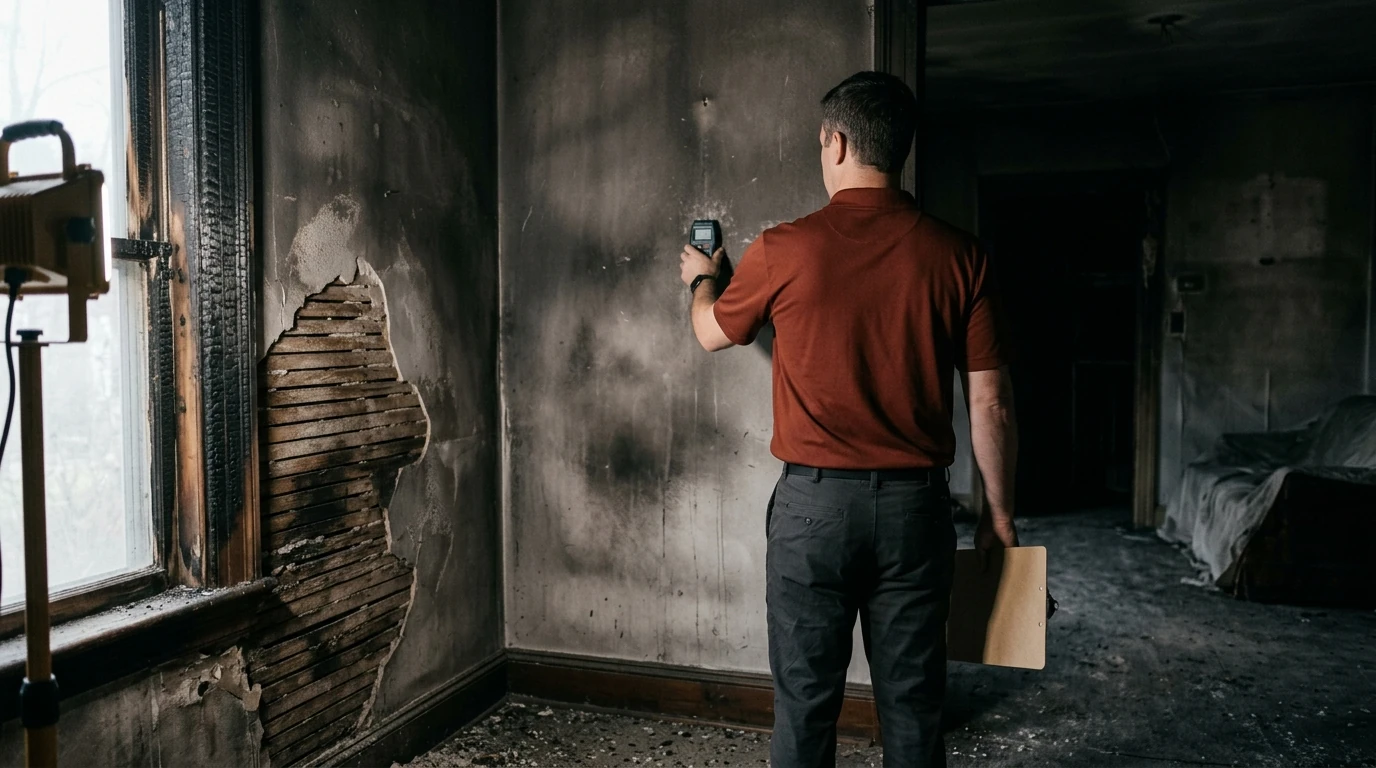
Quick answer: In Topsfield and the surrounding North Shore, fire damage restoration costs range from about $1,500 for smoke and soot cleanup in a single room to $150,000 or more when framing, drywall, and electrical need full reconstruction. Most jobs fall between those extremes. The biggest cost drivers are how many rooms burned, how far smoke traveled through the HVAC system, and whether structural materials like studs or subfloor need replacing.
If you’re standing in a scorched kitchen or a smoke-stained living room right now, trying to figure out what this is going to cost before the insurance adjuster calls back, you’re not alone. Fire damage pricing swings wildly because “fire damage” covers everything from a grease fire that stayed in one pan to a structure fire that took out a wall. Here’s how the pricing actually breaks down, and what drives a bill from a few thousand dollars into six figures.
How much does fire damage restoration cost in Topsfield, MA?
Most Topsfield homeowners pay somewhere between $3,000 and $40,000 for fire damage restoration, with smoke-only cleanups on the low end and multi-room structural fires on the high end. Whole-house rebuilds after a major fire regularly exceed $75,000.
The table below shows typical industry ranges by scope. These are general figures, not a quote: every loss gets its own written scope once a technician has walked the property.
| Scope of damage | Typical cost range |
|---|---|
| Smoke and soot odor removal only (no flame contact) | $1,500 - $4,000 |
| Single room, contained fire damage | $4,000 - $12,000 |
| Multi-room fire with smoke traveling through ductwork | $15,000 - $40,000 |
| Structural fire requiring framing and drywall replacement | $40,000 - $75,000 |
| Major structural fire with full reconstruction | $75,000 - $150,000+ |
| Content cleaning and pack-out (separate line item) | $1,000 - $10,000+ |
Older North Shore housing stock, including the colonial and cape-style homes common around Topsfield, Ipswich, and Boxford, can push costs toward the higher end of a range. Plaster walls, original lath, and older wiring often need more careful demolition and code-driven upgrades than a newer build.
What determines the cost of fire damage restoration?
Four factors move the number more than anything else: how much square footage was affected, how far smoke and soot traveled, what materials absorbed the smell, and whether the fire department’s water use added a water damage claim on top of the fire claim.
A fire contained to one appliance or one wall section is a cleaning and repair job. A fire that triggers the home’s smoke detectors and runs through the HVAC system contaminates rooms the flames never touched, soot settles into carpet fibers, upholstery, and HVAC ductwork, which is why a “small” kitchen fire can still generate a five-figure claim once odor remediation and duct cleaning are added in.
Water from firefighting efforts is its own cost driver. When a structure fire gets extinguished, the water used to put it out often soaks framing and subfloor, meaning the restoration scope has to address both the fire damage and a secondary water damage claim, usually under the same policy.
Code upgrades add cost too. If an inspector requires updated electrical or smoke detection hardware during the rebuild, that’s a code-compliance cost the original construction didn’t have, and it’s a normal part of post-fire reconstruction in most Massachusetts towns.
What does smoke and soot cleanup cost on its own?
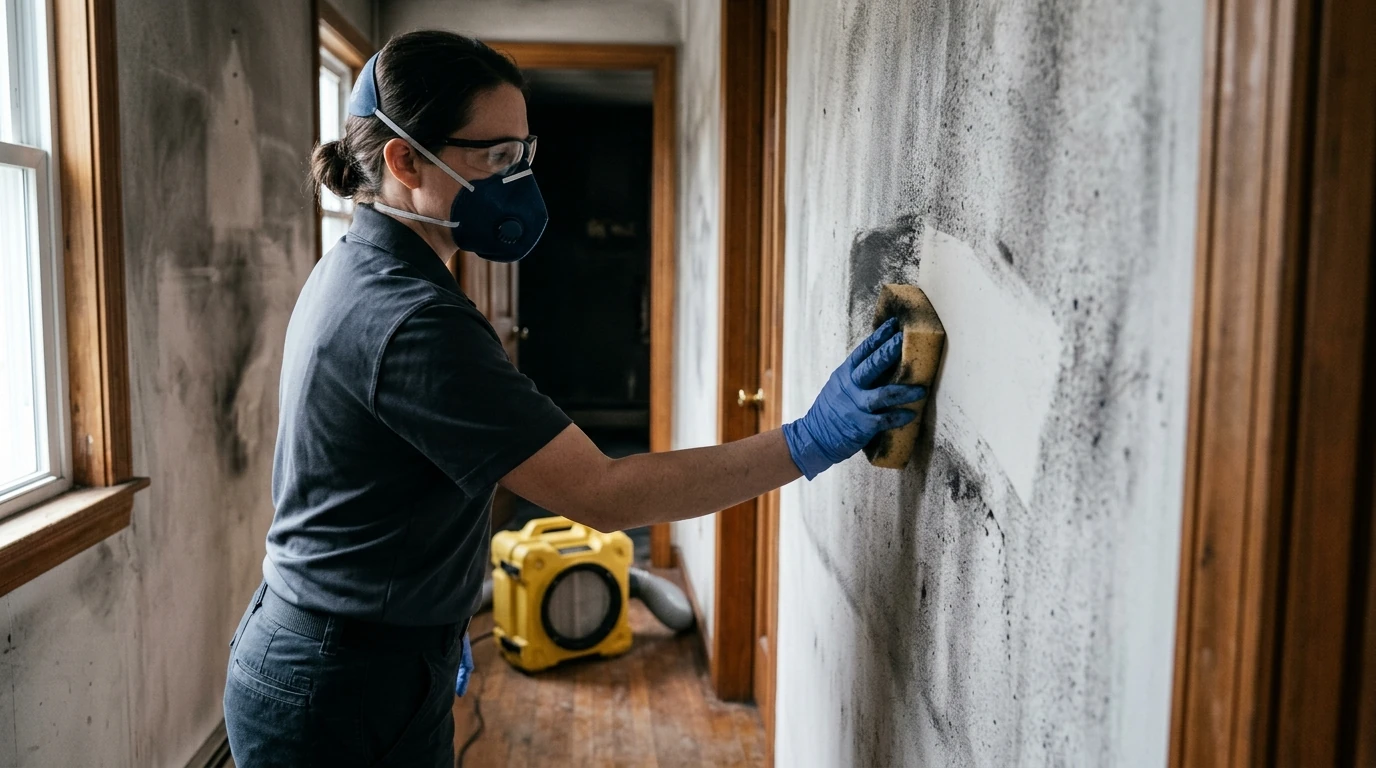
Smoke and soot cleanup without structural repair typically runs $1,500 to $4,000 for a contained incident, or more if odor has worked its way into HVAC ductwork and soft materials throughout the home.
This is the scenario homeowners often underestimate. A fire can stay small, a stovetop flare-up, a small electrical fire that self-extinguished, and still leave behind soot residue on every surface in the house because soot particles travel on heat and air currents. Cleaning that residue off walls, ceilings, and hard surfaces is one cost; deodorizing fabric, carpet, and HVAC systems is a separate line item, done with hydroxyl generators, thermal fogging, or ozone treatment depending on how deep the odor has set.
Our fire and smoke restoration process post walks through what a technician actually checks during that first assessment, and the full restoration process breakdown covers how soot cleaning fits into a larger job when there is structural damage too.
What does insurance typically pay for after a house fire?
Most standard homeowners policies cover sudden, accidental fire damage, including the structure, personal belongings, and in many policies, the cost of temporary housing while the home is unlivable. What a policy does not reliably cover: damage from a fire caused by neglected maintenance, or any cost above the policy’s dwelling and contents limits.
The Insurance Information Institute outlines what standard policies typically include, and it’s worth reading before the adjuster’s first call. Documentation matters as much as coverage. Photograph everything before cleanup starts, keep every receipt tied to the loss, and get a written scope of work from the restoration company before any demolition begins. That written scope is what most adjusters expect to see before they approve a claim amount, and it protects you if the scope needs to expand once walls are opened up.
Massachusetts contractors performing home improvement work, including fire reconstruction, are expected to hold a Home Improvement Contractor registration; ask to see it before signing anything.
What happens during the fire damage restoration process?
Fire damage restoration generally follows five phases: safety assessment, water extraction (if firefighting water was used), soot and debris removal, deep cleaning and deodorization, and finally reconstruction of anything that was removed.
- Assessment and board-up. A technician inspects structural safety, boards broken windows, and tarps any roof damage to stop further exposure.
- Water removal, if needed. Extraction equipment removes standing water left by firefighting efforts before mold has a chance to start, which the EPA notes can begin within 24 to 48 hours on wet materials.
- Debris and soot removal. Charred materials, ruined contents, and loose soot get removed. This is also when a pack-out of salvageable belongings typically happens for off-site cleaning.
- Cleaning and odor treatment. Surfaces are cleaned to the ANSI/IICRC S700 Standard for Fire and Smoke Damage Restoration, and odor is treated with the equipment appropriate to how deep it’s set into the materials.
- Reconstruction. Drywall, flooring, framing, and electrical are rebuilt to code and the home is returned to pre-loss condition.
For a deeper walk-through of each phase, the U.S. Fire Administration’s guidance on recovering after a home fire is a solid, independent reference while you’re waiting on contractor estimates.
What does reconstruction after a fire typically cost?
Reconstruction, meaning the rebuild phase after cleanup and demolition, typically adds $40,000 to $150,000 or more to a claim once framing, drywall, flooring, electrical, and finish work are all included.
This is where total fire claims climb fastest, because reconstruction pricing behaves like any other renovation: it’s driven by square footage, finish level, and whether code upgrades are required. A single bedroom needing new drywall, paint, and flooring might run $8,000 to $15,000. A kitchen that needs new cabinetry, electrical, and subfloor can run considerably higher. Keeping the restoration and reconstruction scopes with one company, rather than handing the rebuild to a separate general contractor, usually keeps the insurance documentation consistent from the first inspection through the final walkthrough.
If you’re early in a claim and trying to get a realistic number, the most useful next step is a written scope from a technician who has actually walked the property, not a phone estimate. Request a fire damage assessment from Restore & Repel and get that scope documented before you sign off on anything with the insurance company.
About Restore & Repel
Restore & Repel employs IICRC-certified technicians (WRT, FSRT, AMRT) based in Topsfield, Massachusetts, serving the North Shore since 2003 (MA HIC License CS-113-396). Their crews handle fire and smoke damage restoration, odor removal, water damage restoration, mold remediation, and reconstruction across Topsfield, Peabody, Beverly, Danvers, Andover, and surrounding communities, with 24/7 emergency response. This post was prepared with input from the Restore & Repel team.
Need help now? Call Restore & Repel at (800) 393-1532.
Video Transcript
Just had a fire in your Topsfield or North Shore home? Before the adjuster calls, here’s what restoration actually costs in 2026. Costs range from fifteen hundred dollars for smoke cleanup in one room, to over one hundred fifty thousand for full reconstruction. Most Topsfield homeowners pay between three thousand and forty thousand dollars, depending on how many rooms were affected and how far smoke spread. Smoke travels fast. Once it moves through your HVAC system, soot settles into carpets, furniture, and ductwork everywhere. Older colonial and cape-style homes around Topsfield often cost more, since plaster walls and original wiring need careful handling. Firefighting water adds another layer. Soaked framing and subfloors often turn a fire claim into a water damage claim too. Even a small kitchen fire can leave soot on every surface, so odor removal and duct cleaning add real cost. Most homeowners policies cover accidental fire damage, including the structure, contents, and temporary housing, but documentation matters before any demolition begins. Always ask to see your contractor’s Massachusetts Home Improvement registration before signing any restoration agreement. Every fire is different, and your home deserves a real inspection, not a guess. Call Restore & Repel at (800) 393-1532 for a free estimate.