
TL;DR: The best fire damage restoration company for a Topsfield home handles soot and structural cleaning, fire-hose water extraction, odor removal, and insurance documentation under one scope, holds IICRC fire and smoke (FSRT) training, and can carry the job through reconstruction so you are not managing separate contractors. Confirm Massachusetts Home Improvement Contractor registration, ask who performs the work versus who subcontracts it, and get the scope in writing before anyone starts.
If you’re standing in a scorched kitchen in Topsfield or Boxford right now, phone in hand, trying to figure out who actually fixes this, you’re probably getting a wall of nearly identical search results. Every company claims to be certified, fast, and trustworthy. The difference that actually matters is narrower than it looks: who does the full job, in what order, and who is accountable for the result. This guide breaks down what to check before you hire anyone.
What should a fire damage restoration company actually handle?
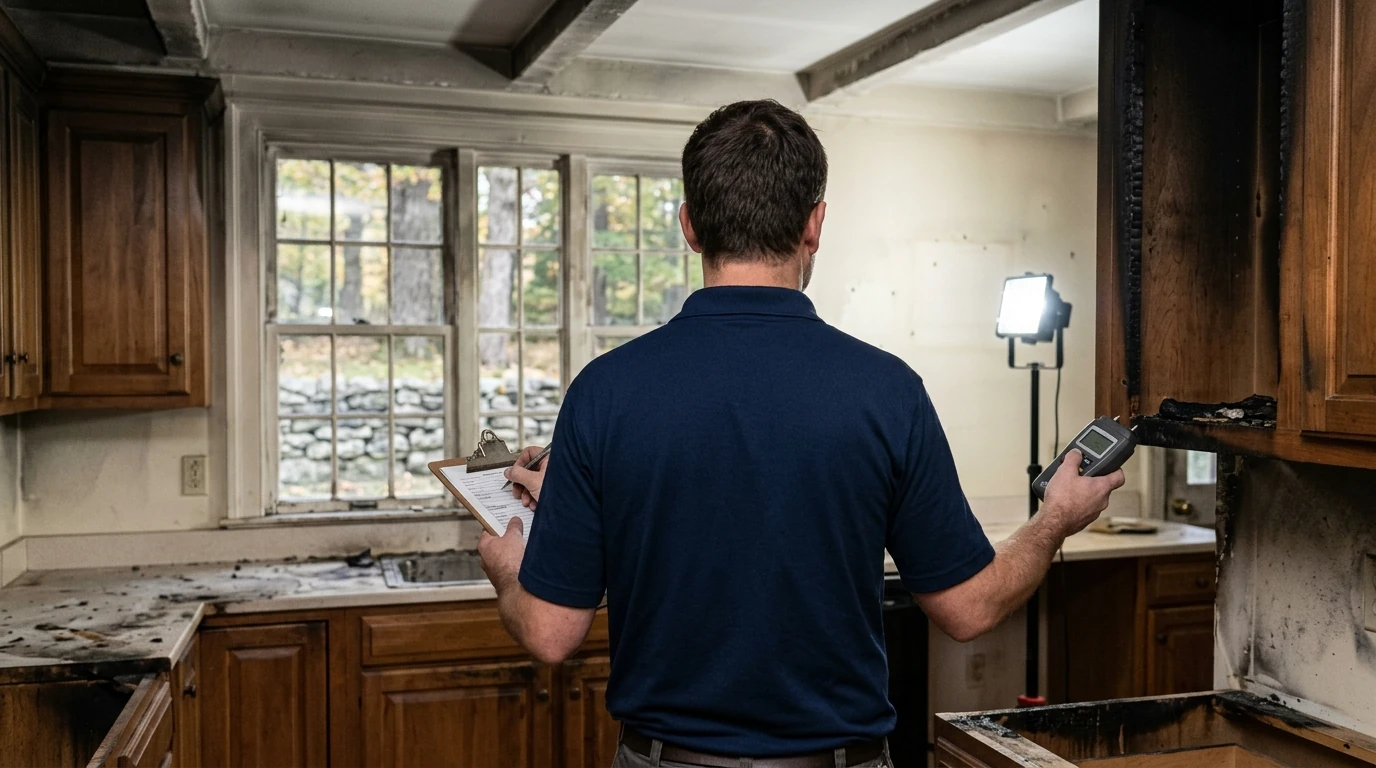
A complete fire restoration scope covers five things: soot and smoke residue removal, structural cleaning or demolition of damaged materials, extraction of the water used to fight the fire, odor neutralization, and documentation for your insurance claim. If a company only offers one or two of these, you’ll likely end up coordinating multiple contractors yourself.
Soot behaves differently depending on what burned. Protein fires (grease, food) leave a greasy, hard-to-remove film; synthetic materials leave an acidic residue that etches metal and glass if left too long. The company you hire should identify the soot type before cleaning, not apply the same method to every surface.
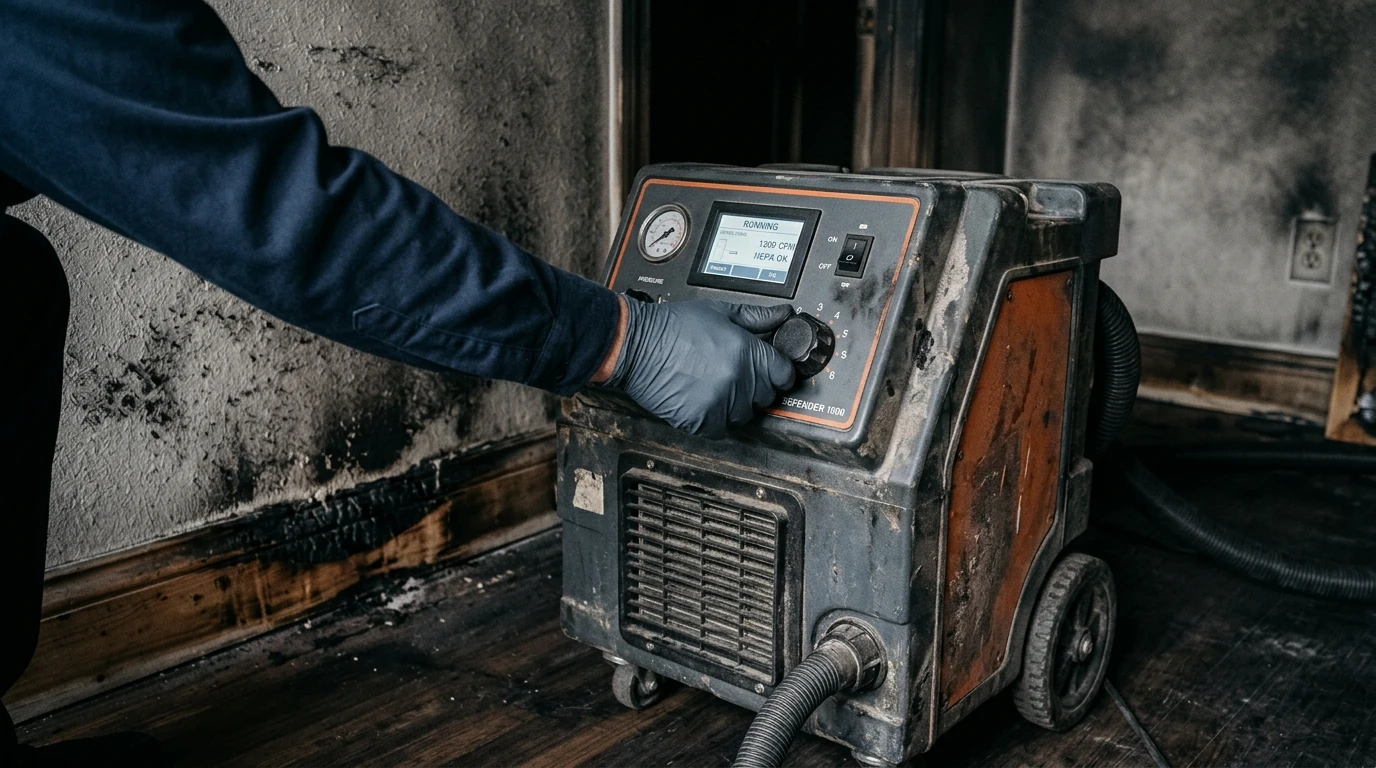
Fire-hose water is often overlooked. Fire crews use thousands of gallons to extinguish even a small residential fire, and that water soaks into subfloors, insulation, and framing. If the company you’re evaluating only talks about soot and smoke, ask directly how they handle the water intrusion left behind, because untreated moisture leads to mold within 24 to 48 hours on wet materials, per the EPA.
What does IICRC fire and smoke restoration certification actually mean?
IICRC FSRT certification means a technician has completed formal training in the ANSI/IICRC S700 Standard for Professional Fire and Smoke Damage Restoration, covering soot chemistry, structural cleaning methods, and odor control protocols. It’s an individual technician credential, separate from a company’s general business license.
Ask two questions: does the technician on-site hold current FSRT training, and does the company itself carry IICRC-certified technicians status? The Institute of Inspection, Cleaning and Restoration Certification maintains both designations, and a legitimate firm should be able to show you either without hesitation. A company that can’t answer clearly is worth a second look.
Should you hire a local restorer or a national franchise after a fire?
Either can do competent work, but the real question is who is actually on your job site and who they report to. National franchises often subcontract the physical labor to local crews while the franchise brand handles sales and insurance liaison, which can add a layer between you and the people doing the work.
A locally owned company typically means the owner or a direct employee is accountable for the crew’s work, scheduling, and any callbacks. That matters most in the weeks after the fire, when you need someone reachable, not a call center routing you to a regional dispatcher. Neither structure is automatically better; ask directly who will be on-site and whether that crew is a direct employee or a subcontractor.
What questions should you ask before hiring a fire restoration company?
Ask these four questions before you sign anything: Who performs the physical work, employees or subcontractors? Can you provide a written scope before demolition starts? Does your team handle the rebuild, or will I need a separate general contractor? How do you document damage for my insurance adjuster?
That last question matters more than homeowners expect. Insurers typically cover sudden, accidental fire damage, but the payout depends heavily on documentation: photos, moisture readings, and an itemized scope submitted before work begins. The Insurance Information Institute notes that a standard homeowners policy generally covers fire, but every policy has its own limits and exclusions, so confirm coverage with your adjuster rather than assuming.
Also check Massachusetts Home Improvement Contractor registration for any reconstruction work, since that’s separate from a restoration company’s cleanup license.
Who should you call for fire damage restoration in Topsfield?
Call a company that can run the job end to end, from soot removal through the rebuild, so you’re not managing three separate contracts during an already stressful month. Restore & Repel is IICRC-certified technicians for both water and fire and smoke restoration and also handles the reconstruction and roofing work that often follows a fire, which means one crew can carry the job from mitigation to the final nail.
If you’re further along in the process and just need the drying or rebuild piece, our choosing a restoration company guide covers the general vetting steps that apply across water, fire, and storm claims.
Whoever you choose, get the scope in writing, confirm who’s doing the physical labor, and don’t sign a contract that bundles demolition and rebuild into one vague line item.
About Restore & Repel
Restore & Repel employs IICRC-certified technicians (WRT, FSRT, AMRT) serving Topsfield and the North Shore since 2003, licensed under Massachusetts registration CS-113-396. The firm’s crews handle fire and smoke restoration, water damage, mold remediation, odor removal, reconstruction, and roofing, which lets one team carry a fire loss from mitigation through rebuild.
Need help now? Call Restore & Repel at (800) 393-1532.
Video Transcript
If a fire just damaged your Topsfield home, you’re probably drowning in search results that all sound the same. A complete fire restoration job covers soot removal, structural cleaning, water extraction, odor control, and insurance documentation, all under one roof. Soot isn’t all the same. Grease fires leave greasy residue, while synthetic materials leave acidic soot that damages metal and glass fast. Firefighters use thousands of gallons of water, and that moisture can trigger mold growth within just 24 to 48 hours if ignored. Ask if your technician holds IICRC fire and smoke training. That certification means real, standardized training in soot chemistry and odor control. Whether you choose a local company or a national franchise, ask who’s actually on-site, an employee or a subcontractor you’ve never met. Before signing anything, ask who performs the work, whether you’ll get a written scope, and if they’ll handle your full rebuild. Good documentation, photos, moisture readings, and an itemized scope, helps support your insurance claim, though coverage always depends on your policy. Also confirm your contractor’s Massachusetts Home Improvement registration before any reconstruction work begins on your home. Restore & Repel handles fire, smoke, and water damage from day one through the final rebuild. Call Restore & Repel at (800) 393-1532 to schedule an assessment.